TL;DR
The average whole-home renovation runs $80,000–$200,000. Most homeowners renovate one room at a time. Here is what each project costs in 2026:
- Kitchen: $10K–$25K (budget) · $25K–$65K (mid-range) · $65K+ (premium)
- Bathroom: $5K–$15K (powder room / basic) · $15K–$35K (full bath) · $35K+ (master)
- Basement: $10K–$25K (basic finish) · $25K–$50K (mid-range) · $50K+ (full suite)
- Living room: $3K–$8K (cosmetic) · $8K–$20K (mid-range) · $15K–$50K (open concept)
- Bedroom: $2K–$6K (basic) · $6K–$15K (mid-range) · $80K+ (addition)
- Exterior: $5K–$15K (paint + trim) · $15K–$40K (siding + windows) · $40K+ (full)
- Full home: $40K–$80K (light update) · $80K–$200K (moderate) · $200K+ (gut renovation)
Budget 15–20% over the estimate. It is not pessimism. It is what happens.
Introduction
A renovation estimate is the beginning of a negotiation with reality. The number on the contractor's proposal is what happens if nothing goes wrong: no asbestos behind the tile, no knob-and-tube inside the wall, no load-bearing partition where you planned the open kitchen. Something always goes wrong.
That is not a reason to skip the renovation. It is a reason to build the number before you talk to a contractor, so you know what the job is worth and where the real range sits.
Here is what each project actually costs in 2026, broken out by scope, what drives the number, and how to build a budget that survives contact with the job site.
Renovation Costs at a Glance
| Project | Budget | Mid-Range | Premium | Typical Time |
|---|---|---|---|---|
| 1Kitchen | $10K–$25K | $25K–$65K | $65K+ | 3–8 wk |
| 2Bathroom | $5K–$15K | $15K–$35K | $35K+ | 2–4 wk |
| 3Basement | $10K–$25K | $25K–$50K | $50K+ | 4–8 wk |
| 4Living room | $3K–$8K | $8K–$20K | $20K+ | 1–3 wk |
| 5Bedroom | $2K–$6K | $6K–$15K | $15K+ | 1–2 wk |
| 6Exterior | $5K–$15K | $15K–$40K | $40K+ | 2–6 wk |
| 7Full home | $40K–$80K | $80K–$200K | $200K+ | 3–9 mo |
Bars are proportional to the full-home mid-range benchmark. More disruption dots mean harder to live in during the work. Kitchen earns the highest ROI tag because it returns 60–80% of cost at resale in most markets.
Kitchen Renovation Cost
The kitchen is where budgets double and where renovations pay back the most. $25,000–$65,000 is the mid-range for most homeowners: new cabinets, quartz or granite countertops, new appliances, and maybe a modest layout tweak.
Budget ($10K–$25K)
Paint the cabinets instead of replacing them. Swap the hardware, countertop, backsplash, and sink. Add new lighting. Leave the layout alone. Done right, a budget kitchen refresh looks 80% as good as a full replacement at 30% of the cost.
What you don't get: new bones. Old cabinet boxes that are out of level or showing wear will show through paint within a few years. Budget kitchens work when the structure is solid and only the finish is tired.
Mid-range ($25K–$65K)
Full cabinet replacement (semi-custom), stone or quartz countertops, tile backsplash, new sink and fixtures, mid-tier appliances, new flooring. Labor runs about $5,000–$15,000 of the total. Permits add $500–$1,500 if you're moving plumbing or electrical.
Premium ($65K–$150K+)
Custom cabinetry alone can be $30,000–$80,000. Add a layout change (moving plumbing or gas is $2,000–$8,000 each), commercial-grade appliances, stone slab backsplash, integrated lighting, and heated floors.
What moves kitchen cost most: cabinet quality. The gap between stock cabinets at $100–$300 per linear foot and custom at $500–$1,200 per linear foot accounts for a $30,000–$50,000 swing on a standard kitchen.
Bathroom Renovation Cost
Bathroom renovations return 60–67% at resale in most markets, below the kitchen but still one of the better-performing single-room investments.
Powder room ($3K–$10K)
A half bath refreshes fast and cheap. New vanity: $400–$2,000. New toilet: $200–$800. Tile floor: $500–$1,500 in material. Labor: $1,000–$3,500. This is the easiest high-impact renovation in the house.
Full bath: basic update ($5K–$15K)
New vanity, toilet, fixtures, paint, lighting. Leave the tile and tub alone. A mid-quality vanity with stone top runs $600–$1,800. A good contractor charges $2,500–$6,000 in labor. Fast, clean, low disruption.
Full bath: full renovation ($15K–$35K)
New tile floor and surround, new tub or walk-in shower, vanity, toilet, exhaust fan, lighting. Tile work alone runs $1,500–$6,000 in material plus $3,000–$8,000 in labor. A walk-in shower conversion adds $3,000–$12,000 depending on size and tile choice.
Master bath: premium ($35K–$80K+)
Double vanity, soaking tub, walk-in shower with frameless glass, heated floors, custom tile, recessed lighting. Heated floor adds $3,000–$8,000 installed. A frameless glass shower enclosure is $2,000–$6,000. Premium tile runs $15–$50/sq ft before labor.
Basement Renovation Cost
Finishing a basement is one of the highest-ROI projects by cost per square foot. You're adding livable area at $30–$80/sq ft, compared to $100–$200/sq ft for an above-grade addition.
Basic finish ($10K–$25K)
Drywall, paint, laminate flooring, basic lighting, electrical. No bathroom, no HVAC reconfiguration. Adds a usable rec room or home office. Budget $15–$30/sq ft for a simple finish on a 700 sq ft basement: $10,500–$21,000.
Mid-range ($25K–$50K)
Proper insulation, framing, electrical to code, HVAC extension, egress window, bathroom rough-in. Budget $35–$55/sq ft. The egress window alone runs $2,500–$5,000 installed (required for a legal bedroom in most jurisdictions).
Full suite ($50K–$100K+)
Full bathroom, bedroom, kitchenette or wet bar, separate entrance. Labor costs scale fast: a licensed electrician runs $75–$150/hour, a plumber $85–$200/hour. Minimum ceiling height for a legal basement bedroom is 7 feet in most codes. If you're short, factor in beam relocation.
Living Room and Common Areas
Living rooms are cheap to cosmetically refresh and expensive to structurally reconfigure. The range is wide because "open concept" converts a closed living room into a structural problem.
Cosmetic update ($3K–$8K)
New paint ($300–$1,000 for a room), new floors ($1,500–$4,000 for 400 sq ft of hardwood or LVP), updated lighting ($300–$800 per fixture installed). Fast, minimal disruption, high visual impact.
Mid-range ($8K–$20K)
New hardwood or engineered wood throughout, built-in bookshelves or media wall, fireplace surround, updated trim and millwork, recessed lighting. Built-ins alone run $2,000–$8,000 depending on size and cabinet quality.
Open concept conversion ($15K–$50K+)
Removing a wall between the kitchen and living area sounds simple. If it's load-bearing (it usually is), it's not. Structural engineer: $500–$1,500. LVL beam and post installation: $3,000–$10,000. Refinishing floors to match where the wall was: $1,500–$3,000. Moving outlets, HVAC vents, or switches: $500–$3,000. The wall demo is the cheapest part.
Bedroom Renovation Cost
Bedrooms are the easiest room to renovate cosmetically and the most disruptive to structurally extend. A standard bedroom update costs little. A master suite addition costs as much as a new car.
Basic update ($2K–$6K)
Paint, new flooring, updated lighting, closet organizer. A quality closet system runs $500–$2,000 for a standard reach-in. Hardwood or LVP flooring for a 200 sq ft bedroom: $1,000–$2,500 installed. Fast, livable during work.
Mid-range ($6K–$15K)
Walk-in closet conversion, new windows, updated lighting throughout, trim refresh, hardwood floors. Walk-in closet framing and shelving: $3,000–$8,000.
Master suite addition ($80K–$200K+)
Adding square footage is structurally expensive. Foundation work, framing, roofline integration, siding, windows, interior finish, and a full bathroom. Budget $100–$200/sq ft for a 400 sq ft addition, all-in. This is a major project, permitting is mandatory, and six months is a realistic timeline.
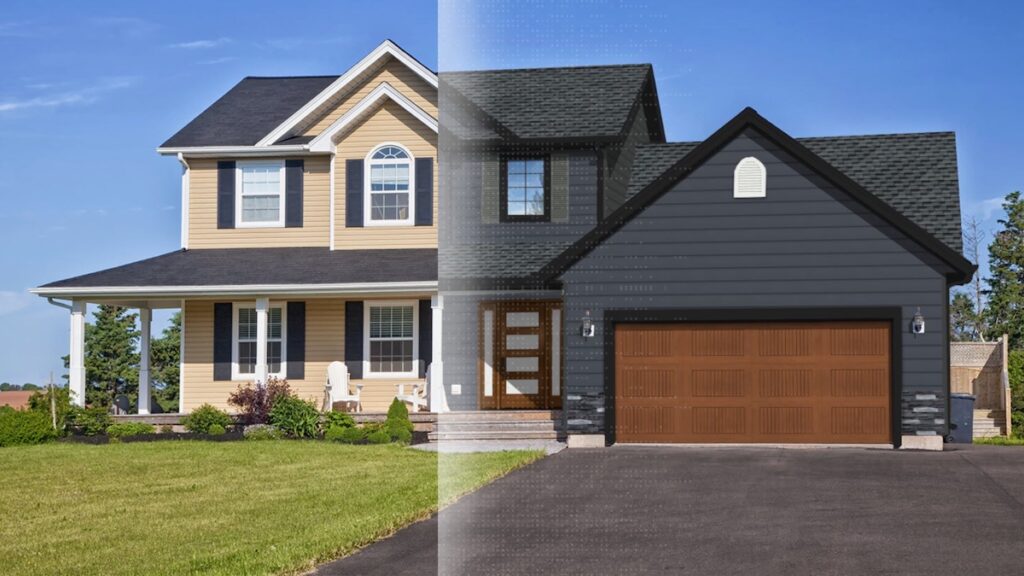
See it before you buy it.
Upload one photo. Real siding on your actual house.
 The visualizer behind the +300 brands you trust






Exterior and Curb Appeal Renovation Cost
Exterior renovations are the most visible per dollar. New siding, windows, and an entry door can transform the entire read of a house from the street.
Cosmetic refresh ($5K–$15K)
Fresh exterior paint ($3,000–$8,000 on most homes), new front door ($800–$3,000 installed), shutters, new house numbers, updated porch lighting, basic landscaping. Fast, high visual impact, no permits in most cases.
Mid-range ($15K–$40K)
New siding on part or all of the house. Vinyl siding: $8,000–$16,000 installed. Fiber cement (Hardie): $12,000–$25,000. New windows: $400–$1,000 per window installed, more for premium glass. New garage door: $1,500–$4,000 installed.
Full exterior renovation ($40K–$100K+)
Complete siding replacement, all new windows, new entry system, new roof if needed, front addition or covered porch. Permits are required. Timeline stretches to 4–8 weeks for contractor availability alone in busy markets.
Before choosing siding or exterior materials, visualizing them on your actual house saves costly mistakes. The Renoworks Home Design tool lets you compare siding colors, materials, and trim combinations on a photo of the property before anyone picks up a hammer.
Full-Home Renovation: What to Expect
A full-home renovation is not a room renovation scaled up. It is a different kind of project: sequential dependencies, compounding permits, contractor coordination, and a living situation that typically requires moving out.
Light update ($40K–$80K)
Cosmetic refresh throughout: paint, floors, fixtures, hardware. No structural work, no kitchen or bath gut. Typically owner-managed, faster than expected, but invasive if you're living in it.
Moderate renovation ($80K–$200K)
Kitchen gut, one or two bathroom renovations, new floors throughout, possibly a layout change. Expect 3–6 months on a 2,000 sq ft house. Plan to be out for at least part of it.
Full gut renovation ($200K–$500K+)
Every surface touched. Electrical, plumbing, HVAC: all replaced to code. New insulation, windows, possibly structural reconfiguration. On a 2,000 sq ft house: $100–$250/sq ft all-in. On an older home with surprises inside the walls: budget the higher end and expect to go over.
Same house, three scopes. Full gut costs nearly 6× more per square foot than a light update because you're replacing systems, not just finishes.
What Drives Renovation Cost
These are the levers that move the total. Some are in your control, most are not.
Location. Labor costs in New York City run 2–3x what they run in rural Ohio. A mid-range kitchen renovation that costs $35,000 in Dallas costs $70,000–$90,000 in San Francisco.
Material tier. Stock cabinets at $100–$300/linear ft versus semi-custom at $200–$600 versus custom at $500–$1,200. Same slot, 4–12x price difference. This single decision drives more budget variance than any other line item.
Labor market. Skilled trades are tight. A licensed electrician runs $75–$150/hour. A plumber: $85–$200/hour. A finish carpenter: $60–$120/hour. In busy markets, wait times for a good contractor run 3–6 months. Rushing into whoever is available is how renovations go sideways.
Scope creep. Budgets rarely shrink. "While we're at it" additions add 10–25% to most projects: the extra outlet, the recessed lighting added to the plan, and the tile that went to the ceiling instead of 6 inches above the counter.
Structural surprises. Open a wall and find asbestos: $2,000–$8,000 abatement. Find knob-and-tube wiring: $5,000–$15,000 to update the run. Find the wall is load-bearing when the demo plan assumed it wasn't: $3,000–$10,000 for beam and posts. These are not unusual. They are the reason you budget a contingency.
Permits and inspections. Any work that changes structure, plumbing, electrical, or HVAC requires permits in most jurisdictions. Permits run $500–$3,000 per project and add 1–4 weeks in inspection scheduling. Skipping them voids your homeowner's insurance coverage for related claims and surfaces as a disclosure item at sale.
How to Budget a Renovation
1. Start with the room, not the finish. Price a mid-range renovation for the room in your market (see the table above). That is your floor. The finishes you choose move you up or down within the range.
2. Add 20% contingency. Not 10. A 10% contingency disappears the first time the inspector calls back. Twenty percent survives most job site surprises without requiring you to cancel scope.
3. Get three bids. The range across bids for the same job regularly runs 30–50%. The lowest bid is often missing scope. Ask each bidder what the lowest bid is excluding, not why yours is higher.
4. Put it in writing. A good contract specifies: scope in detail, material specifications (brand and model number, not just "quartz countertop"), payment schedule tied to milestones, and a change order process. Change orders are how contractors make up margin. Know what the process is before the first surprise.
5. Sequence smart. If you're renovating multiple rooms, run mechanical work (plumbing, electrical, HVAC) before finish work. Paint last. Flooring after everything that could damage it. The sequence is not optional. It is how you avoid paying twice to fix work that gets damaged by the next trade.
Stop competing on price.
Win on trust.
Twenty top contractors on how they win the bid without being the cheapest name on the homeowner’s list.
Check out the playbook →
Frequently Asked Questions
What is the average cost to renovate a house? The average mid-range full-home renovation runs $80,000–$200,000 on a 2,000 sq ft home. Per square foot: $40–$100. A full gut renovation runs $100–$250/sq ft, or $200,000–$500,000 on the same home. Light cosmetic updates run $20–$40/sq ft.
Which rooms have the best return on investment? Kitchens return 60–80% of renovation cost at resale in most markets. Bathrooms return 60–67%. Exterior improvements (new siding, windows, doors) return 65–75% and improve both resale and insurance ratings.
How long does a house renovation take? A single room (kitchen, bathroom) takes 3–8 weeks in the renovation itself, plus lead time to source materials and schedule contractors. Full-home renovations run 3–9 months for moderate scope, a year or more for full gut projects. Both estimates assume a contractor is already lined up.
Do I need a permit for a renovation? Any work that changes structure, plumbing, electrical, or HVAC requires permits in most jurisdictions. Cosmetic work (paint, flooring, hardware) typically does not. Skipping required permits voids your homeowner's insurance for claims related to the work, triggers a disclosure requirement when you sell, and can require unpermitted work to be demolished and redone.
Should I renovate before selling or sell as-is? It depends on the project. A cosmetic kitchen refresh in a low-inventory market often recoups its cost. A full kitchen gut in a buyer's market rarely does. Pre-sale renovations with the best returns: exterior paint, front door, landscaping, and minor kitchen and bath updates. Avoid structural projects with long lead times if you're selling in less than 12 months.
How much should I budget for a kitchen renovation? Budget $25,000–$65,000 for a mid-range kitchen renovation on a standard layout with no structural changes. Add $2,000–$8,000 per plumbing or gas relocation. Custom cabinets alone can add $20,000–$50,000. The cabinet decision drives more of the total than any other single choice.
What is the biggest renovation mistake homeowners make? Starting without a budget. The second biggest: underestimating how long it takes. Most renovations run 20–30% over budget and 50–100% over the original time estimate. The projects that come in close have a general contractor who has done the same job before, a contract with specific material specs, and a contingency that was never expected to survive intact.
Conclusion
The honest range for a house renovation is wide on purpose: location, material tier, and what's hiding inside the walls decide more than the scope you start with. A mid-range kitchen renovation that costs $35,000 in one market costs $70,000 in another. The numbers here are a calibration tool, not a quote.
Use them to know the room, set the floor, and build in enough contingency to absorb the first surprise without blowing the budget. Then get the bids and put it in writing before the demo starts.
For exterior projects like siding, windows, and entry doors, seeing the options on your actual house before you commit saves both money and regret. Run your home through the Renoworks Home Design tool to compare materials and colors before the contractor order goes in.
Don't guess. See it first.
Upload one photo. Compare siding, windows, and trim on your actual house before the order goes in.
The visualizer behind the +300 brands you trust