TL;DR
Roll roofing is cheapest upfront ($0.50/sq ft) but asphalt shingles cost less per year. Compare 8 roofing materials by price, lifespan, and best use:
- Roll Roofing: cheapest material upfront, $0.50–$1.50/sq ft, but shortest lifespan (5–10 years). Best for: sheds, temporary cover.
- Asphalt Shingles: $1–$2/sq ft, 15–25 years. The default choice. Best for: most homes, predictable cost.
- Metal Roofing: $5–$12/sq ft, 40–70 years. Highest upfront, lowest cost-per-year. Best for: longevity, modern look.
- Wood Shakes/Shingles: $6–$15/sq ft, 20–40 years. Premium look, high maintenance. Best for: traditional homes, cedar appeal.
- Composite/Synthetic Shingles: $2–$5/sq ft, 25–50 years. Split the difference. Best for: curb appeal on a moderate budget.
- Concrete/Clay Tiles: $10–$18/sq ft, 50+ years. Heavy, durable, regional. Best for: Mediterranean/Spanish revival.
- Slate: $15–$30/sq ft, 75–200 years. Luxury choice. Best for: high-end homes, heritage properties.
- TPO/EPDM (Flat Roof): $2–$8/sq ft, 15–30 years. Commercial crossover. Best for: flat roofs, modern commercial.
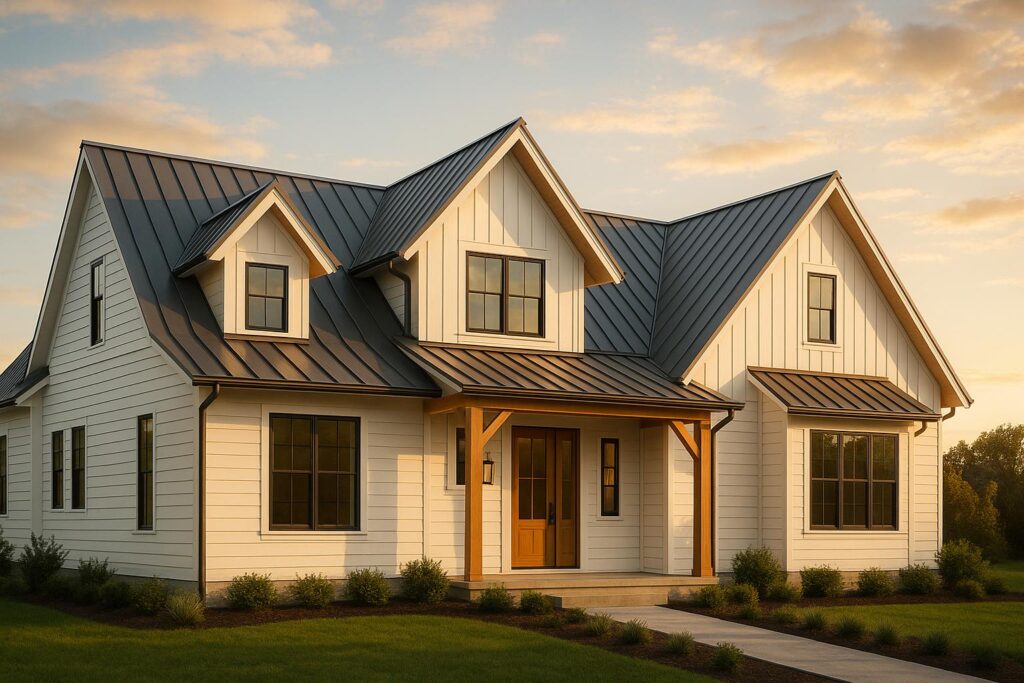
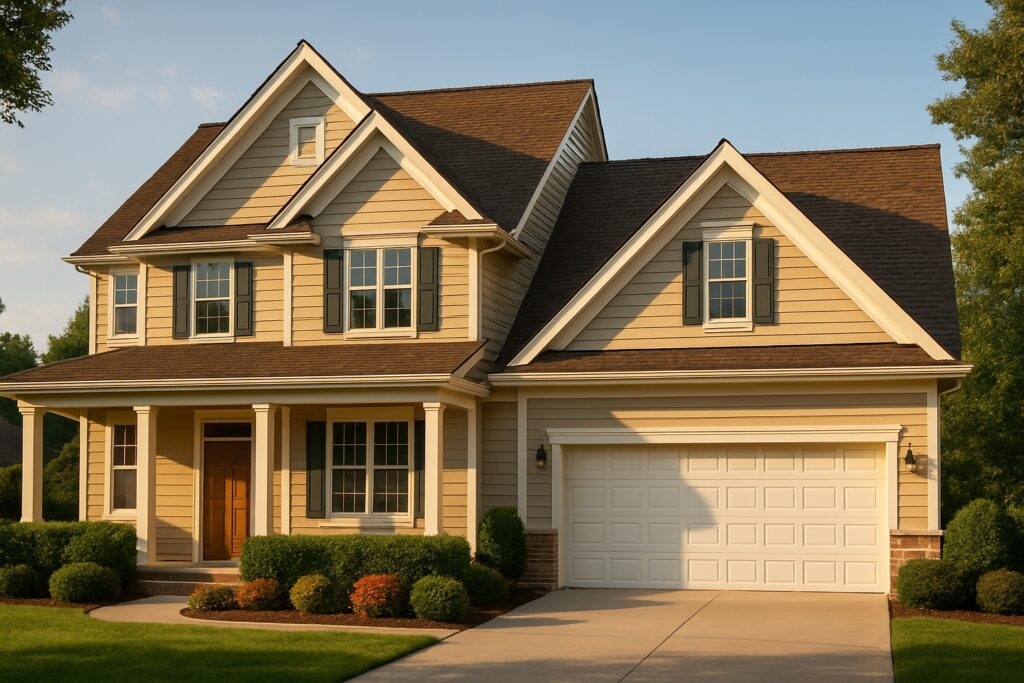
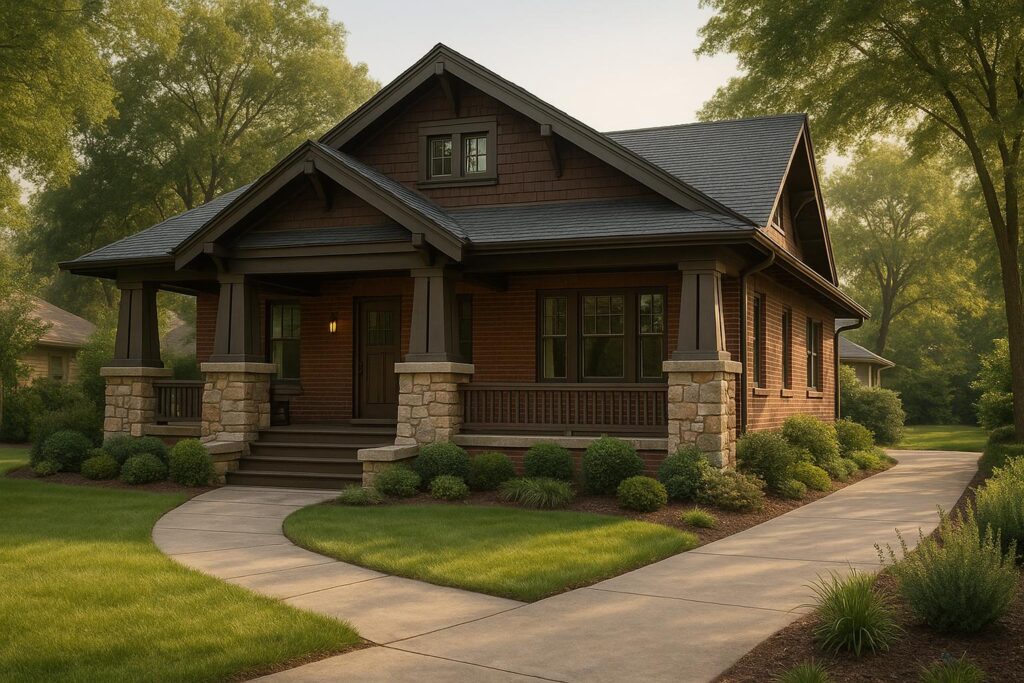
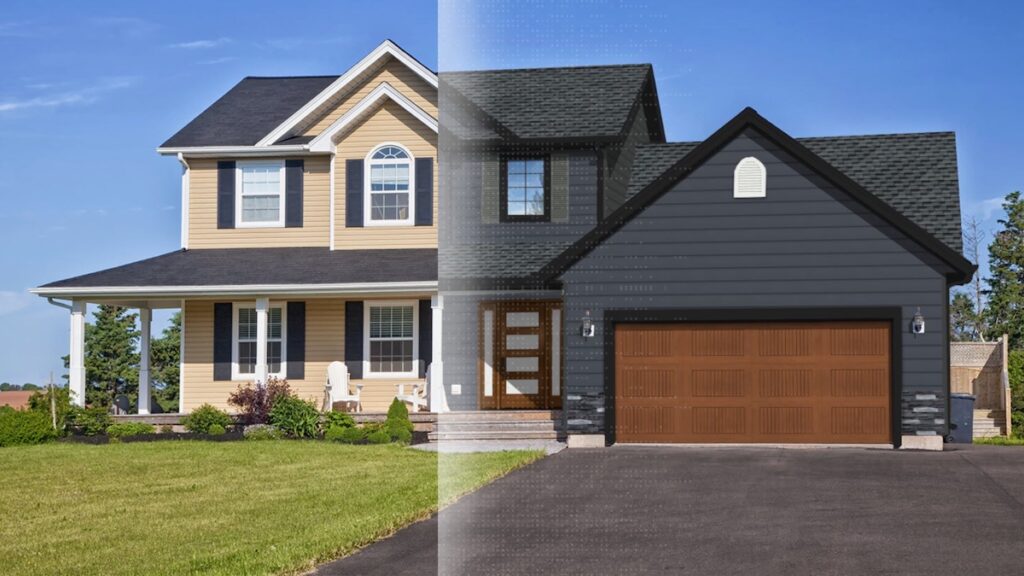
Short on time? Start with Renoworks Roof Visualizer to see how each material looks on your actual home before you choose.
Introduction
A new roof runs $8,000 to $25,000. It is one of the biggest checks you will write on the house, and it sets how the place looks for the next 20 to 50 years and how much you climb a ladder every spring. Most people still pick a roof the way they pick a coffee size: whatever the neighbor got, or whatever is cheapest the week the old one gives out. Then they live with it.
That is the wrong question. The question is not what is cheapest today. It is what is cheapest over the years you will actually own the roof. A $0.50/sq ft roll of tar paper lasts 8 years. A $10/sq ft metal roof lasts 60. Spread the cost across the time you own the house and the math flips.
Here are the eight most common roofing materials, ranked by upfront cost: what each runs, how long it lasts, what it costs per year, and where it earns its keep.
The 8 Roofing Materials at a Glance
| Material | Cost/Sq Ft | Lifespan | Best For | Maintenance |
|---|---|---|---|---|
| 1Roll Roofing | $0.50–$1.50 | 5–10 years | Sheds, temporary cover | High |
| 2Asphalt Shingles | $1–$2 | 15–25 years | Most homes | Moderate |
| 3Metal Roofing | $5–$12 | 40–70 years | Longevity, modern | Low |
| 4Wood Shakes/Shingles | $6–$15 | 20–40 years | Traditional homes | Very High |
| 5Composite Shingles | $2–$5 | 25–50 years | Curb appeal, budget | Low |
| 6Concrete/Clay Tiles | $10–$18 | 50+ years | Mediterranean style | Low |
| 7Slate | $15–$30 | 75–200 years | High-end homes | Low |
| 8TPO/EPDM (Flat) | $2–$8 | 15–30 years | Flat roofs | Moderate |
Bars are proportional and labels show the full range. More dots mean more upkeep. Slate's lifespan runs off the chart at 75–200 years.
What Is Roofing Material Cost?
Roofing cost is three numbers: material per square foot, labor, and the lifespan you get back. A square (100 sq ft) of asphalt shingles runs about $100 in material. A square of slate runs $1,500. Sticker shock, until you do the math. Slate lasts 150 years and the shingles last 20, so slate works out to about $10 a year against $5 a year for asphalt. Close enough that other factors decide it.
The number nobody quotes you is maintenance. Cheap materials bill you later. Wood shakes need cleaning and treating every year or they rot. Roll roofing wants patching every few years. A slate roof done right asks for almost nothing. Over the years you own the place, the "cheap" roof often costs the most.
Why "Cheaper" Isn't Always Your Best Choice
The trap is reading "cheapest material" as "best deal." They are not the same line. Tar paper at $0.50/sq ft lasts 8 years. Metal at $10/sq ft lasts 60. On a 2,000 sq ft roof that is $1,000 vs $20,000 upfront, which looks like an easy call. Run it per year and it turns: the roll costs $125 a year, the metal $333. Add labor, permits, and the headache of tearing off and redoing a roof twice in one lifetime, and metal pulls ahead.
Same two roofs. The 20× price gap shrinks to under 3× per year, and that is before you pay to install roll roofing six more times under one metal roof.
A cheap price tag drags the install down with it. A crew quoting $3/sq ft all-in for asphalt is cutting something, because labor alone runs $2 to $4/sq ft when the work is good. Bargain material plus bargain labor stacks two compromises on the one part of the house that keeps the rain out.
So ask the only question that matters: best value for how long you will own the house. Selling in 5 years? Cheap makes sense. Staying 30? Don't.
Ranked by Quality: Materials Affect Durability
The category on the quote is only half the story. The tier inside it is the other half. A 3-tab shingle quits at 15 years. An architectural shingle off the same truck goes 25. Galvanized steel rusts out around 20. Standing-seam Kynar 500 runs 50 and up. Same material name, double the life.
A. Cheap Materials, Budget Grade
- Roll roofing (tar paper)
- 3-tab asphalt shingles
- Galvanized metal
Lifespan: 8–15 years. Maintenance: high. Cost-per-year: $50–$150.
B. Mid-Tier Materials, Standard Grade
- Architectural asphalt shingles
- Standard composite
- Standard TPO
Lifespan: 20–30 years. Maintenance: moderate. Cost-per-year: $100–$250.
C. Premium Materials, High Grade
- High-end composite shingles
- Kynar 500 metal
- Treated wood shakes
Lifespan: 40–70 years. Maintenance: low to moderate. Cost-per-year: $150–$400.
D. Luxury Materials
- Slate
- Handmade clay tiles
- Copper or zinc metal
Lifespan: 75–200 years. Maintenance: minimal. Cost-per-year: $100–$300 (stretched over a century).
The Real Comparison: What Else Drives Roofing Cost
Upfront cost is the part everyone stares at. These are the line items that move the real number.
Structural load. Slate, clay, and concrete are heavy. Your house may need reinforcing before it can hold them. Budget $2,000–$5,000 extra. Metal and asphalt skip this entirely.
Slope and complexity. A simple gable roof installs at $50–$100/sq ft. Add valleys, dormers, and steep pitch and it climbs to $150–$250/sq ft. Material compounds it. Metal is harder to lay on a cut-up roof, so the labor stings more.
Local climate. Ice dams chew up asphalt in cold country, so lean metal. Desert UV bakes cheap shingles brittle, so pay up. Wind zones demand impact-rated material, full stop.
HOA and code. Some neighborhoods mandate slate or wood shakes, both expensive. Others spec architectural asphalt. The cheapest option is off the table if the rulebook says no.
Underlayment, flashing, ventilation. The visible material is about 40% of the system. Underlayment, flashing, and ventilation add another $1–$3/sq ft. Skimp here and even a premium roof fails early, from underneath, where you never see it coming.
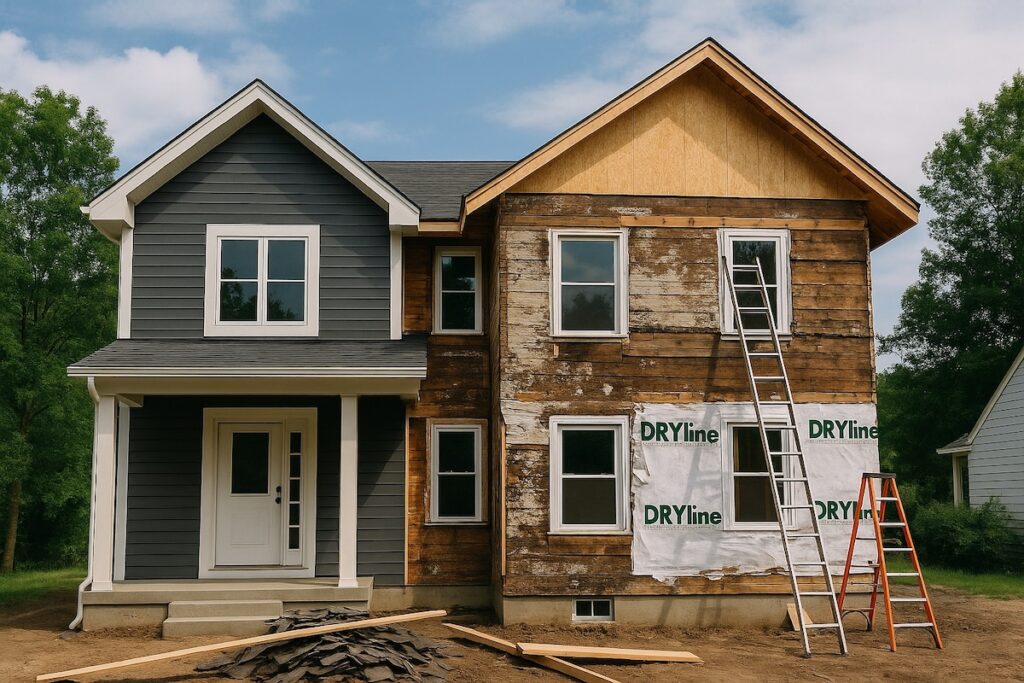
Removal and disposal. Tearing off the old roof runs $1–$3/sq ft. Slate and tile run higher, $3–$5/sq ft. That is $2,000–$10,000 you cannot skip.
Upload one photo. Your new roof on your actual house.
 The visualizer behind the +300 brands you trust






The 8 Cheapest Roofing Materials, Ranked by Lifespan
1. Roll Roofing (Tar Paper)
- Cost
- $0.50–$1.50/sq ft (material only)
- Lifespan
- 5–10 years
- Best for
- Sheds, garages, temporary cover
- Maintenance
- High
Roll roofing is tar-soaked paper, rolled out and nailed down. It is the cheapest roof money buys, and it earns that price. Reach for it when you want something quick and disposable: a shed that might come down, a stopgap patch before winter. Put it on a house and it fails. UV cooks the tar, seams split, water finds the gap, and you are back up there inside a decade.
Why it fails as a primary roof: it was never built to be permanent. It was built to be cheap. Nail it to a house and you have dressed up a short-term fix as a roof.
2. Asphalt Shingles (3-Tab, Budget Grade)
- Cost
- $1–$1.50/sq ft (material only)
- Lifespan
- 12–15 years
- Best for
- Budget homes, short-term rentals
- Maintenance
- Moderate to high
The 3-tab is the default American roof: cheap, fast, stocked everywhere. The thin budget version lasts about 15 years if nothing goes wrong. In hard sun, rough weather, or with zero upkeep, call it 12. Step up to a mid-tier 3-tab and you get maybe 18. Go architectural (thicker, textured) and you are at 20–25. Same material, the grade does the work.
Why they're popular: lowest upfront cost, every crew can hang them fast, and replacement is no drama. Selling the house in 5 years? Asphalt is the smart money.
Watch-outs: they fail fast once they start, with no five-year warning. Around year 14 you get moss, curling, and granule loss. Once you see granules in the gutter, the clock is basically out.
3. Composite/Synthetic Shingles
- Cost
- $2–$5/sq ft (material only)
- Lifespan
- 25–50 years
- Best for
- Homeowners who want durability without wood maintenance
- Maintenance
- Low
Composite shingles fake the look of wood shakes or slate using plastic, rubber, and recycled polymer. They don't rot, don't split, and don't demand the yearly babysitting real wood does. They look sharper than asphalt, last 2 to 3 times longer, and cost 2 to 3 times as much.
This is the quiet middle ground: premium looks and real durability without the slate invoice. If you want a roof that reads high-end for 30-plus years and you never want to scrape moss off a shake, composite is where the value hides.
Strengths: durable, low maintenance, sharp looking, impact-resistant.
Watch-outs: the floor and the ceiling are far apart. Budget brands die early. Read the reviews and the install spec before you sign.
4. Asphalt Shingles (Architectural, Standard Grade)
- Cost
- $1.50–$3/sq ft (material only)
- Lifespan
- 20–25 years
- Best for
- Most homes, good longevity-to-cost ratio
- Maintenance
- Low to moderate
Architectural shingles (also called dimensional or laminate) are thicker and heavier than 3-tab, with a textured face that mimics wood or slate. They run 20–25 years, look better doing it, and take weather better. For most houses this is the sweet spot: a clear step up from budget, still priced like a roof and not a renovation.
Put a 25-year architectural shingle on a 2,000 sq ft roof and you are at roughly $4,000–$8,000 in material plus another $4,000–$8,000 in labor and tear-off. Call it $8,000–$16,000 all-in, or $320–$640 a year. Solid.
5. Metal Roofing (Galvanized Steel)
- Cost
- $5–$8/sq ft (material only)
- Lifespan
- 40–50 years (with maintenance)
- Best for
- Longevity on a moderate budget
- Maintenance
- Low, occasional resealing
Metal in galvanized steel or a painted finish is tough and goes up fast. A 2,000 sq ft galvanized roof runs $10,000–$16,000 in material, $16,000–$24,000 with labor. Over 40 years that is about $400–$600 a year, right alongside high-grade asphalt once you bank the maintenance you skip.
Galvanized can rust past 30–40 years on the coast or under heavy snow. A painted finish like Kynar 500 goes 50-plus with almost no fade or corrosion.
Why people choose it: low upkeep, modern lines, sheds snow fast, quiet in rain if it is insulated right, and recyclable at the end.
Watch-outs: standing seam, the premium version, costs more and needs a specialist. Cheap corrugated reads agricultural. And it drums in the rain unless you add underlayment.
6. Wood Shakes/Shingles
- Cost
- $6–$15/sq ft (material only)
- Lifespan
- 20–40 years (with annual maintenance)
- Best for
- Traditional/coastal homes where aesthetics justify the work
- Maintenance
- Very high: annual cleaning, treatment, repairs
Wood shakes have dressed high-end homes for centuries, and they earn the look. They also earn a chore list. Plan on cleaning moss every year or two, treating against rot, checking for splits, and swapping shakes as they fail. Over a 30-year life that is $3,000–$5,000 in maintenance alone.
Love the look enough to pay a roofer to tend it every year? Budget $300–$500 a year in upkeep. A well-kept wood roof on a coastal cottage is beautiful in a way nothing else copies.
Strengths: timeless look, natural insulation, very durable if you keep up.
Watch-outs: high maintenance, period. Skip it if you won't commit to the yearly care. In humid air, mold and moss never quit. And it is banned in California's fire-prone zones by code.
7. Concrete/Clay Tiles
- Cost
- $10–$18/sq ft (material only)
- Lifespan
- 50+ years
- Best for
- Mediterranean, Spanish, or Southwestern homes
- Maintenance
- Low, occasional broken tile replacement
Clay and concrete tiles are heavy (5–10 lbs/sq ft against 2 to 3 for asphalt), gorgeous, and nearly indestructible. A 2,000 sq ft tile roof runs $20,000–$36,000 in material, plus labor and the structural reinforcement your house probably needs to carry it. Call it $30,000–$50,000 installed, or $600–$1,000 a year over 50 years.
Tiles crack now and then from hail or a boot, and swapping one is easy. The real catch is regional. Standard in the Southwest and Florida. In the Northeast they are rare and the installers are rarer.
Strengths: extremely durable, beautiful, thrives in heat, low maintenance.
Watch-outs: heavy (needs structural support), high upfront, and hard to crew outside the Southwest. Hail can crack them.
8. Slate
- Cost
- $15–$30+/sq ft (material only)
- Lifespan
- 75–200 years
- Best for
- High-end homes, heritage properties, long-term investment
- Maintenance
- Minimal, occasional nail replacement
Slate is the Rolex of roofs. Installed right, it outlasts the mortgage, the renovation, and you. A 2,000 sq ft slate roof runs $30,000–$60,000 in material, and with labor and reinforcement the total lands at $50,000–$100,000+. Over a 100-year life that is $500–$1,000 a year, which is oddly reasonable once you annualize it.
The catch is the crew. You need a real slate roofer, an engineer to confirm the house can hold the weight, and the patience to wait for a proper install. Good slate roofers are hard to find. A lot of them aged out of the trade decades ago.
Strengths: unmatched lifespan, timeless looks, almost no maintenance, strong resale.
Watch-outs: very high upfront, scarce installers, needs structural reinforcement, and repairs cost real money when something does go.
How We Evaluated These Materials
We ranked the eight on what actually costs you money, not on brochure numbers:
- Upfront cost per square foot (material only; labor and structure swing it)
- Realistic lifespan in real climates and real upkeep, not the warranty card
- Maintenance burden (annual cleaning, sealing, inspections, repairs)
- Cost-per-year (total spread over the roof's real life, not just the first decade)
- Availability and installation difficulty (can you actually hire this where you live?)
- How it fails (what goes wrong, and whether you see it coming)
We left out commercial-only systems (TPO on big-box roofs) and the rare birds (copper lasts forever and almost nobody puts it on a house).
So Which Roofing Material Should You Choose?
Selling in 5 years? Architectural asphalt. $8,000–$12,000 all-in. You get some of it back at resale without overspending on a roof you won't own.
Staying 20+ years, moderate budget? Architectural asphalt or composite. $10,000–$16,000. Best durability per dollar.
Want the lowest yearly cost over decades? Metal (standing seam Kynar 500) or slate. High upfront, low annual once you spread it over 50-plus years.
Care about looks above all? Wood, composite, or slate. Pay for it in maintenance (wood) or upfront (slate, composite).
Hot, sunny climate? Metal or clay tile. They shed heat. Skip cheap asphalt, it cracks and fades.
Cold, snowy climate? Metal or architectural asphalt. Metal dumps snow faster. Avoid roll roofing and wood shakes (ice dams).
Coastal salt air? Kynar metal or slate. Galvanized corrodes, wood needs constant treatment, tile is fine but heavy for coastal wind.
DIY or tight budget? Architectural asphalt. Easy to source, install, and replace. Steer clear of metal (specialized), slate (masters only), and roll roofing (looks cheap, fails fast).
Frequently Asked Questions
What's the absolute cheapest roofing material?
Roll roofing (tar paper) at $0.50–$1.50/sq ft. It also lasts 5 to 10 years and looks every bit of it. On a 2,000 sq ft roof that is $1,000–$3,000 in material, and you will replace it before the mortgage clears. For an actual house, asphalt shingles at $1–$2/sq ft are the cheaper move once you count the redo.
How long does each roofing material actually last?
Budget asphalt: 12–15 years. Architectural asphalt: 20–25. Metal: 40–60 (Kynar 500 hits 50–70). Wood: 20–40 if you maintain it. Composite: 25–50. Tile and concrete: 50+. Slate: 75–200, often outlasting the house. Those assume average climate, a decent install, and some upkeep. Bad weather, a bad crew, or neglect knocks years off all of them.
Can I use cheap roofing materials on a high-end home?
Technically yes. It also looks cheap and drags resale. A $500,000 house wearing a 15-year-old budget asphalt roof tells buyers "deferred maintenance" before they reach the door. Match the roof to the house. Over $400,000, architectural asphalt or metal is the floor. Over $1,000,000, anything under composite or slate reads as a red flag.
Do I need a permit for a new roof?
Almost always, yes. The permit forces code, structural checks, and a real install. It usually runs $100–$500. Skipping it saves a little now and can wreck resale and void an insurance claim if the roof fails.
What's the labor cost to install a roof?
$2–$5 per square foot is typical for asphalt. Metal costs more, $3–$7/sq ft, because it needs specialized hands. Slate and tile run $4–$8/sq ft in labor alone, before structural work. On a 2,000 sq ft roof that is $4,000–$14,000 in labor, depending on complexity, material, and where you live.
Should I patch or replace my roof?
Past 70% of its life (think 17-plus years on a 25-year roof) or more than 30% damaged? Replace it. Patching buys time, not a fix. Redoing half a roof looks mismatched and usually costs almost as much as the whole thing while solving the problem for only a few more years.
Conclusion
The cheapest roof upfront, roll roofing or budget asphalt, bills you later in maintenance, early replacement, and curb appeal you don't have. The priciest, slate or high-end metal, spreads its cost across decades until it pencils out, sometimes cheaper per year than the budget option once you count the redo cycles.
It comes down to three things: how long you will own the house, your climate, and how much you care about looks and resale. Most owners staying 20-plus years in a normal climate land on architectural asphalt or composite, the best value on the board. Longer holds or high-end homes lean metal or slate. Everything else, asphalt buys you time until you know what you really want.
Before you sign, run the math yourself: material plus labor, divided by realistic lifespan, plus realistic yearly upkeep. Compare that cost-per-year across the options. The cheapest sticker is rarely the best deal.
Upload one photo. Compare real shingles on your home, free.
The visualizer behind the +300 brands you trust